Korea Bought a Tariff Ceiling With a Texas Gas Plant: The Chip Tariff Does Not Cover Memory
An empty customs inspection hall at night with a single sealed wooden crate lit on one bench, illustrating the tariff ceiling Korea's US investment package is meant to protect, from korea-stock-guide.com

On 7 September Korea resolved to make a 22 billion dollar, 6.3 gigawatt gas complex at Encinal, Texas the first project under its 350 billion dollar investment package. No listed company owes anything: the money moves through a state vehicle. The package exists to protect a tariff ceiling, and the tariff most coverage cites does not do what it is said to do. The Section 232 action of 14 January 2026 charges 25 per cent on a narrow band of logic parts aimed at Nvidia and AMD accelerators, carries seven end-use exceptions and contains no country ceiling; Korean memory is not in it. The live exposure is a broader measure that has been signalled but not published, whose rate Commerce Secretary Lutnick has said may be linked to how much a company invests in American manufacturing. That is what makes a Texas gas plant a semiconductor story.
TLB and SOCAMM: The Nvidia Capacity Cut That Misses the Substrate Maker

A small detachable memory module standing on edge in a foam tray with its row of gold contact fingers catching low light and an empty socket behind it, illustrating why halving the memory on a module does not halve the substrate maker's orders, from korea-stock-guide.com

Three Korean brokerages published on TLB in August and September, all of them building the case on SOCAMM, the detachable memory module Nvidia’s Vera processor uses. None mentions that Nvidia was reported in late July to have halved that module’s capacity from 192 gigabytes to 96 to hold memory under 29 per cent of a 2.1 million dollar system bill of materials. The published numbers reconcile: eight modules per processor, thirty-six processors per rack, 55 terabytes before and 28 after. Module count does not change, and a substrate maker is paid per module. What halves is bits, which belong to Samsung, SK hynix and Micron. The exposure that matters is module count per processor, and nobody has reported a change to that.

The AI Slowdown Trade of September 2026: Why Samsung and SK hynix Did Not Follow

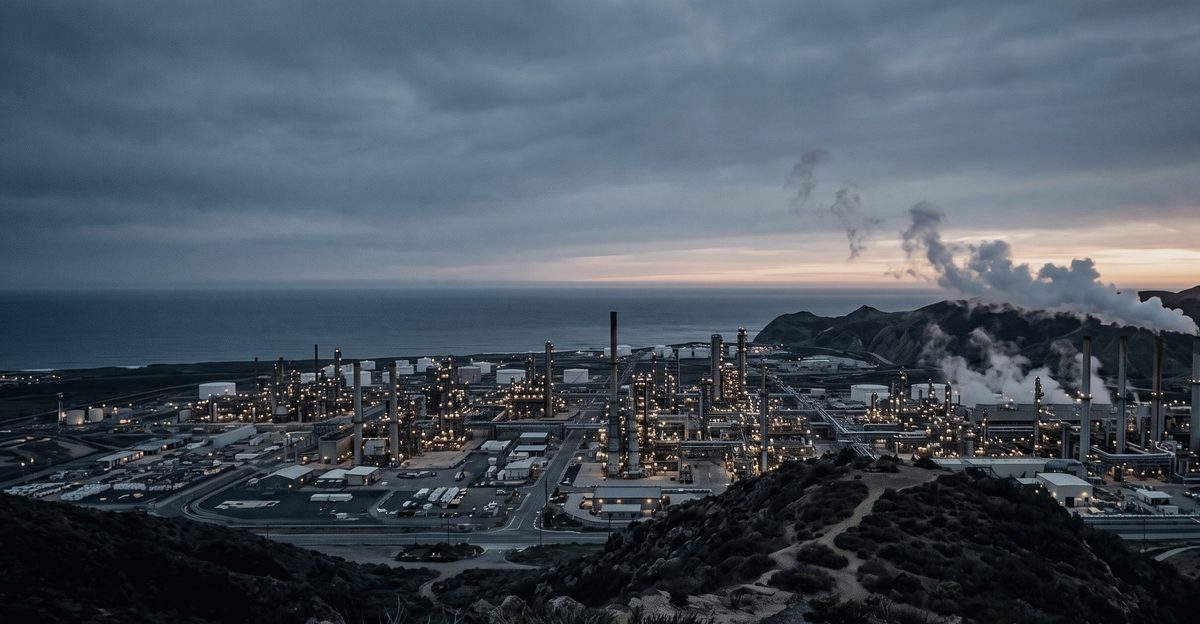
A large industrial plant spread across a coastal plain at first light, seen from a distant ridge, illustrating why the memory supply available in 2027 was committed years earlier, from korea-stock-guide.com

American chip stocks fell about 5 per cent on 14 September after Anthropic’s chief executive called for a slowdown in model development, and the hyperscalers that buy the chips rose. Korea fell harder than the American chip index, then closed higher the next day while US chips kept falling. The reason being credited is long-term supply contracts, and those are the same figures Samsung gave on 30 July, not new ones. TrendForce’s own explanation of why high bandwidth memory contract prices have lagged spot contains the problem: the three large suppliers negotiate those contracts annually, which is the mechanism Micron used to describe its old agreements rather than its new take-or-pay ones. The defence that does hold is physical. By 2027 high bandwidth memory is estimated to take about 30 per cent of wafer input to deliver 13 per cent of bits, new capacity does not ramp until the second half of 2027, and Nvidia is already cutting the memory stack on Rubin Ultra because of what it expects to be unable to buy.

Korea Premium Week 2026: What Is Actually on the Agenda

Rows of empty chairs facing an unlit stage in a large conference hall, illustrating the three-week investor programme Korea has scheduled for overseas institutions, from korea-stock-guide.com

Korea’s financial regulator and its exchange have put 42 institutions and 55 listed companies behind a single three-week programme aimed at foreign investors, running 28 September to 16 October. Samsung Electronics and SK hynix are presenting. But the sessions that decide whether a foreign fund can hold Korean stock without a workaround are the policy … Read more

Samsung Foundry vs TSMC: Taiwan Risk Is the Wrong Case, Packaging Is the Right One

Stacked shipping containers filling a port yard at dawn with gantry cranes behind, illustrating the packaging queue rather than Taiwan risk as the constraint on Samsung Foundry, from korea-stock-guide.com

TSMC’s Form 20-F for the 2025 fiscal year states that most of its production facilities are in Taiwan, and names the outbreak of military conflict, war or hostilities in its risk factors. That is TSMC describing its own exposure in a document it signs. The nearer constraint is dateable and already running: on its 16 July earnings call TSMC said advanced packaging capacity was tight enough to limit customer growth, and that it would welcome competing packaging technology taking some of the load. Samsung Electronics is the one company outside Taiwan that has told the market in its own release that it is winning leading-edge work now, disclosing expanding 2nm design wins for high-performance computing on 30 July. Packaging is not wafer allocation and a design win is not a shipment, so we say what each document does and does not carry. Four claims that travel with this story, including the Taylor capacity figures and a prospective Google allocation, are named and withheld because no body publishes them under its own name.

CoreWeave and Korean Memory Stocks: Is the Link Real?

Bundled fibre-optic strands glowing against dark equipment in close macro, illustrating the question of whether CoreWeave earnings really move Korean memory shares, from korea-stock-guide.com

On 12 August, the day after CoreWeave’s second-quarter results, Samsung Electronics closed up 6.7 per cent and SK hynix up 5.5 per cent, and the Kospi tripped a program-trading curb. The day before, Korea published the largest ten-day semiconductor export figure in its history and the same two stocks did almost nothing. We searched every document CoreWeave has ever filed with the SEC: Samsung appears zero times, SK hynix zero times, HBM zero times. All its GPUs are NVIDIA’s and its three largest suppliers are unnamed. Meanwhile Korean exports to the United States fell 0.2 per cent in the record window while exports to China rose 134.8 per cent, and the Bank of Korea’s own indices show most of the growth is price rather than volume. This is a sentiment link rather than a demand link, and the two come apart on the day sentiment turns.

SK hynix vs Chip Equipment Makers: Where the 2026 Margin Gap Comes From

An industrial building at dusk with one window lit and a plant on the horizon, illustrating the margin gap between SK hynix and the equipment makers that supply it, from korea-stock-guide.com

Korean coverage of this cycle keeps arriving at the same trade: sell the memory makers, buy the companies that equip them. We tested it against reported quarters only, and the filings point the other way. Memory makers earned operating margins of 70 to 80 per cent in their latest quarters against 29 to 37 per cent at ASML, Applied Materials, Lam Research and Tokyo Electron. Korea is about a fifth of revenue at all three tool makers that disclose it, Applied’s Korea revenue was flat in dollars year on year while its total grew 11 per cent, and Tokyo Electron’s Korean peak was the March quarter. Wonik IPS, the closest listed proxy for Korean memory capex and the only one of the three most-named suppliers to have reported June, disclosed revenue down 10.6 per cent and operating profit down 49.5 per cent at an 8.5 per cent margin. EO Technics went the other way, which is the point: this is dispersion, not a sector call. We print no target prices and no ratings, and we say which material we are declining to reproduce.

Memory Oversupply in 2026: What Micron’s Contracts Show, and Korea’s Do Not

Rows of metal filing cabinets in a records room with a single drawer pulled open, illustrating which memory maker has actually filed its long-term supply contract terms, from korea-stock-guide.com

Samsung told analysts on 30 July 2026 that it plans to put 60 to 70 per cent of its memory capacity under long-term contracts, and that figure has become the main reason given for expecting a gentler memory cycle. We went looking for the documents behind it. Micron discloses take-or-pay agreements its own executives say cannot be cancelled, price floors that hold for the term, 16 signed deals covering about a fifth of its DRAM volume, and roughly 100 billion dollars of remaining performance obligation inside its accounts. Samsung gave its number in a spoken answer and left it out of the earnings deck, SK hynix has published no percentage at all, and the sufficiency decimals circulating in Korean coverage come out of an 18,000-dollar subscription datasheet. We also correct the SK hynix capital expenditure figure that nearly everyone is quoting wrongly.

Samsung and SK hynix Fabs to 2028: What Is Committed and What Is Not

Card reading 85.3 trillion won is committed, the rest is a plan, on Samsung and SK hynix fab expansion to 2028, from korea-stock-guide.com

Korean coverage now prices the memory build-out in thousands of trillions of won. We went looking for the announcements that carry both an amount and a date, and found four, all from SK hynix: 9.4 trillion won in July 2024, 21.6 trillion in February 2026, and 35.2 and 19.1 trillion on 7 August 2026, plus 3.87 billion dollars in Indiana. They total 85.3 trillion won and every target in them is a clean room date rather than a production date, with the earliest in February 2027 and the two largest in December 2028 and June 2029. Samsung has published no equivalent, so we print no figure for it, and we withhold the programme totals circulating without a company document behind them.